 -by
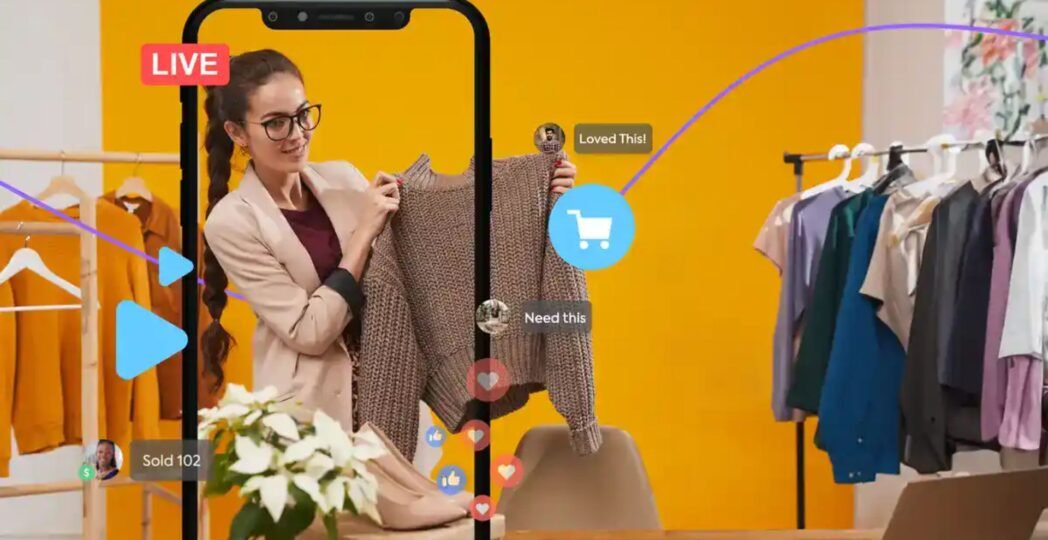
-by The world of online shopping and live stream shopping is changing faster than ever before. Today, customers no longer want only static product images and long descriptions. Instead, they prefer interactive and real-time shopping experiences. That is where live-stream shopping becomes important.
So, what is live shopping exactly? It is a modern eCommerce method where brands sell products through live video broadcasts. During these live sessions, hosts demonstrate products, answer questions, and interact directly with viewers. As a result, shoppers feel more confident before making a purchase.
Moreover, live shopping combines entertainment with online shopping. Therefore, many businesses now consider it one of the fastest-growing trends in digital commerce. Could this be the future of e-commerce? Let’s explore the answer.
What Is Live Shopping?
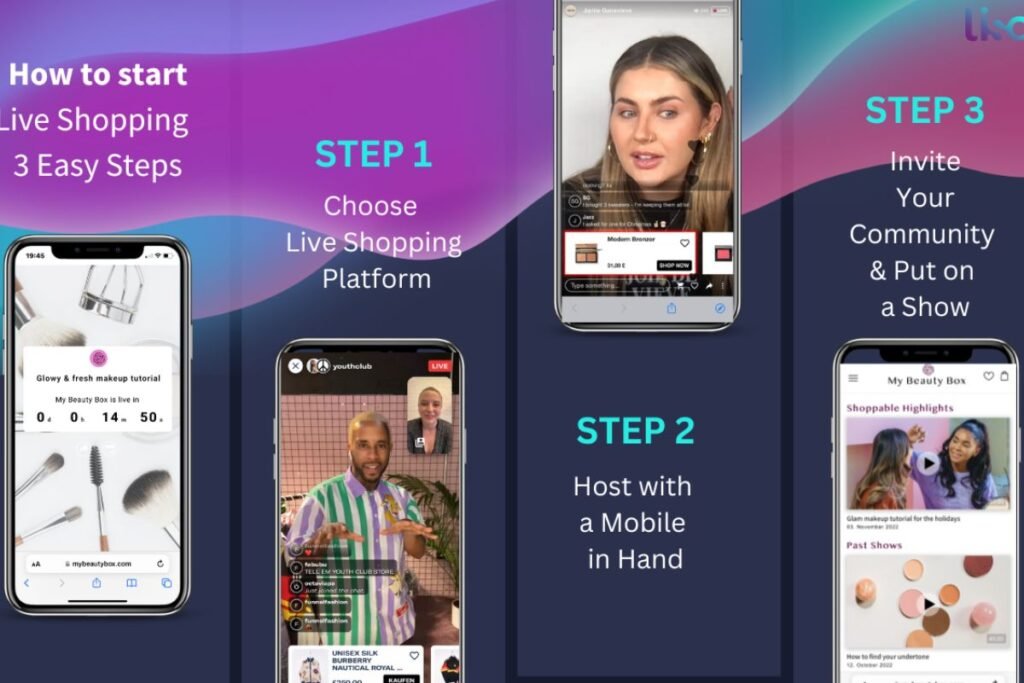
Live shopping is a form of online selling that uses live video streaming to promote products in real time. Customers can watch product demonstrations, ask questions, and buy items instantly during the live session. This strategy first became extremely popular in Asia, especially in China. However, many global brands now use live shopping platforms to increase sales and customer engagement.
In addition, social media platforms like Facebook, TikTok, Instagram, and YouTube have made live stream shopping easier than ever. Unlike traditional online stores, live shopping creates direct communication between brands and customers. Therefore, it feels more personal and trustworthy.
Passionate about technology and innovation? Explore Tech All World & techhatoz.com for the latest tech trends, in-depth tutorials, product reviews, and expert insights—all in one place.
Why Live Stream Shopping Is Growing So Fast
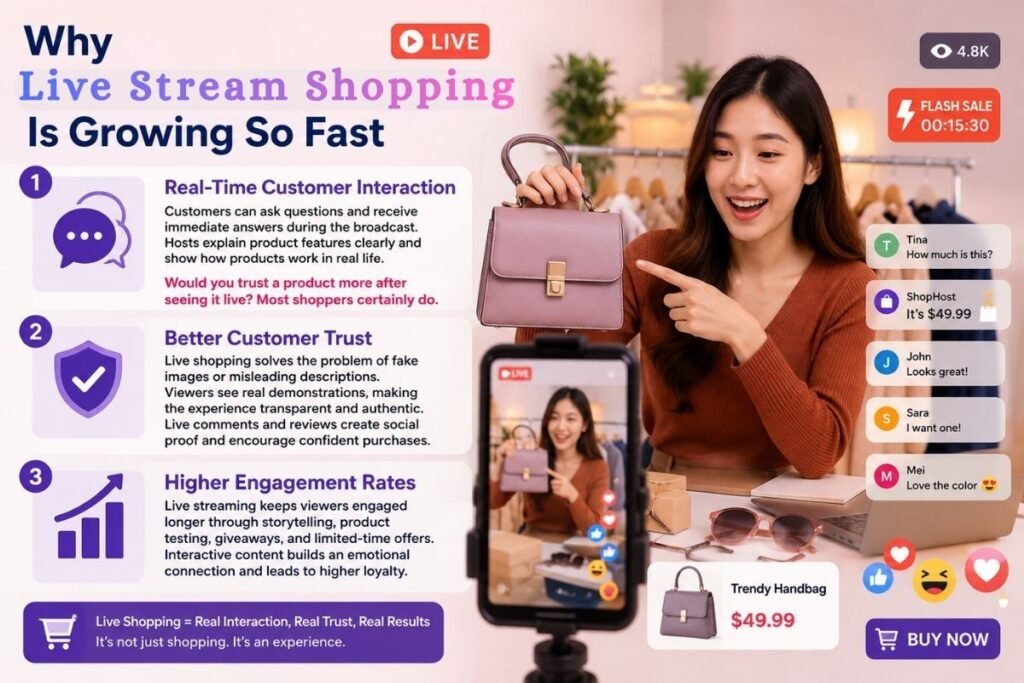
Real-Time Customer Interaction
One major reason behind the success of live stream shopping is instant interaction. Customers can ask questions and receive immediate answers during the broadcast. As a result, buyers feel more connected to the brand.
Moreover, live hosts can explain product features clearly. They can also show how products work in real life. This helps customers make faster decisions. Would you trust a product more after seeing it live? Most shoppers certainly do.
Better Customer Trust
Trust plays a huge role in online shopping. Unfortunately, many customers worry about fake images or misleading product descriptions. However, live shopping solves this problem effectively.
During live sessions, viewers can see real demonstrations without heavy editing. Therefore, the shopping experience feels more transparent and authentic. In addition, customer reviews and live comments create social proof. This encourages more people to buy products confidently.
Higher Engagement Rates
Traditional online ads often struggle to hold customer attention. On the other hand, live stream shopping keeps viewers engaged for longer periods. Hosts usually use storytelling, product testing, giveaways, and limited-time offers during streams.
Consequently, viewers stay active throughout the session. Furthermore, interactive content increases emotional connection with the audience. This can lead to higher customer loyalty over time.
Looking to stay updated with the fast-changing tech world? Visit techallworld.com for trusted technology news, how-to guides, software recommendations, and gadget reviews.
Live Stream Shopping Statistics (2026)
Live Stream Shopping Statistics:
- The global live commerce market continues to grow rapidly.
- U.S. livestream commerce sales increased significantly in 2025 as more consumers adopted interactive shopping.
- TikTok Shop is one of the fastest-growing live shopping platforms.
- Beauty, fashion, electronics, collectibles, and home products generate the highest sales during live streams.
- Live shopping often achieves higher engagement than traditional ecommerce because shoppers can ask questions before purchasing.
Benefits of Live Shopping for Businesses
Increased Sales Opportunities
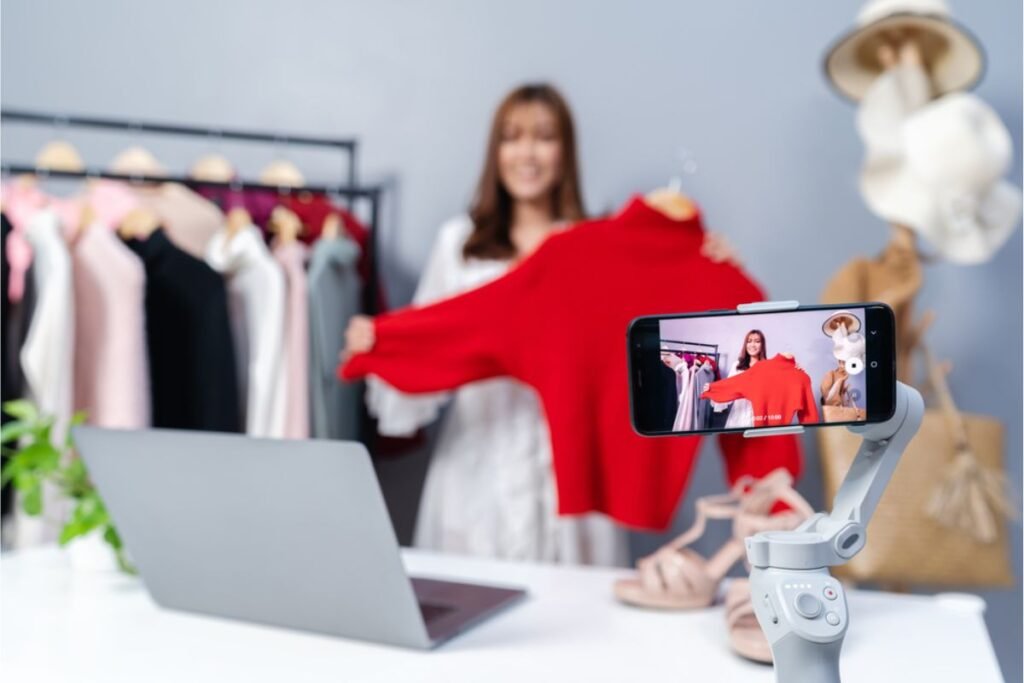
Many brands report higher conversion rates through live shopping events. Customers often make quick buying decisions during live broadcasts because they fear missing special deals. Moreover, live streams create urgency. Limited-time discounts and exclusive offers encourage instant purchases. Therefore, businesses can generate strong sales in a short time.
To maximize your live stream shopping sales, it’s equally important to optimize your online store for search engines. Follow our comprehensive eCommerce SEO Checklist to improve your website’s visibility, attract more organic traffic, and convert viewers into long-term customers.
Lower Marketing Costs
Live shopping can also reduce marketing expenses. Instead of spending heavily on traditional advertisements, brands can use one live session to reach thousands of potential customers. In addition, businesses can reuse live video content on social media platforms later. This provides extra promotional value without additional costs.
Stronger Brand Community
Customers love brands that communicate openly. Live stream shopping allows businesses to build stronger relationships with their audience. For example, brands can answer questions directly and respond to customer feedback instantly. As a result, viewers feel valued and connected. Over time, this interaction helps create loyal online communities around the brand.
Benefits for Customers
Why Customers Love Live Stream Shopping:
- Watch real product demonstrations
- Ask questions before buying
- Receive instant answers
- Access exclusive discounts
- View authentic customer reviews
- Shop with greater confidence
- Enjoy an entertaining shopping experience
Popular Platforms for Live Stream Shopping
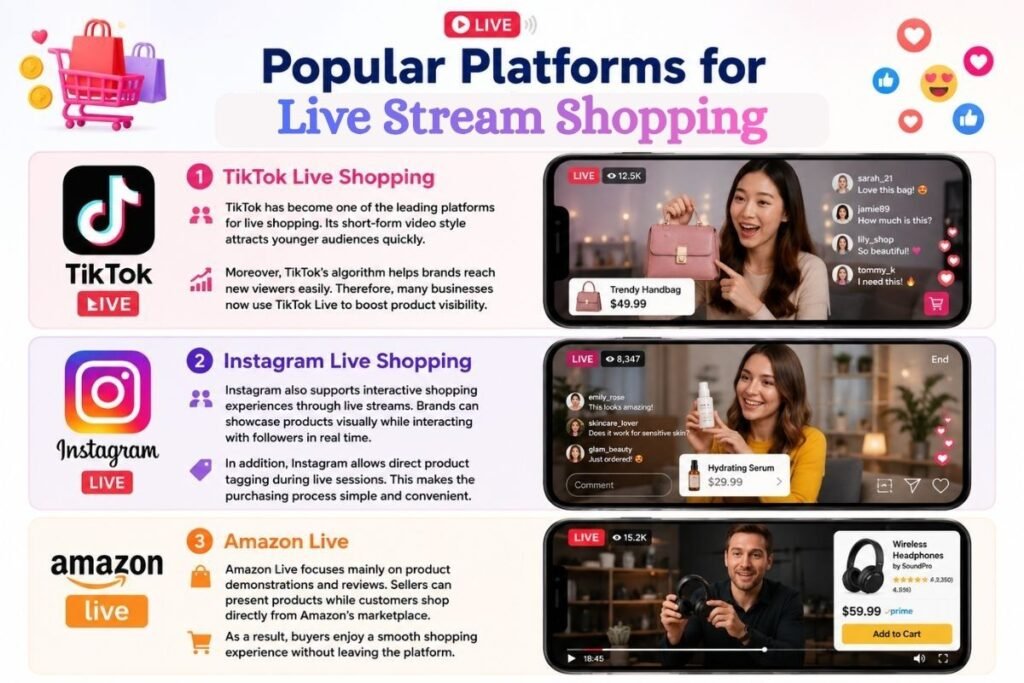
| Platform | Best For | Features |
|---|---|---|
| TikTok Shop | Fashion, Beauty | Live checkout, creator marketplace |
| Amazon Live | Electronics | Product demos, influencer streams |
| Facebook Live | Small Businesses | Large audience reach |
| Instagram Live | Fashion Brands | Product tagging |
| YouTube Live | Long-form demos | High-quality streaming |
| Whatnot | Collectibles | Live auctions |
| eBay Live | Luxury & Collectibles | Verified sellers |
TikTok Live Shopping
TikTok has become one of the leading platforms for live shopping. Its short-form video style attracts younger audiences quickly. Moreover, TikTok’s algorithm helps brands reach new viewers easily. Therefore, many businesses now use TikTok Live to boost product visibility.
Amazon Live
Amazon Live focuses mainly on product demonstrations and reviews. Sellers can present products while customers shop directly from Amazon’s marketplace. As a result, buyers enjoy a smooth shopping experience without leaving the platform.
Facebook Live
Facebook Live is a feature that lets users, creators, and businesses broadcast live videos to their audience on Facebook. It allows real-time interaction through comments and reactions, making it a great way to engage viewers, share updates, host Q&A sessions, and promote products or events.
Instagram Live Shopping
Instagram also supports interactive shopping experiences through live streams. Brands can showcase products visually while interacting with followers in real time. In addition, Instagram allows direct product tagging during live sessions. This makes the purchasing process simple and convenient.
YouTube Live
YouTube Live lets creators connect with their audience in real time through live video streaming. It’s ideal for Q&A sessions, product launches, tutorials, gaming, interviews, and special events. Viewers can interact via live chat, making broadcasts more engaging and personal. With proper planning and promotion, YouTube Live can significantly boost audience engagement and channel growth.
How Live Stream Shopping Works
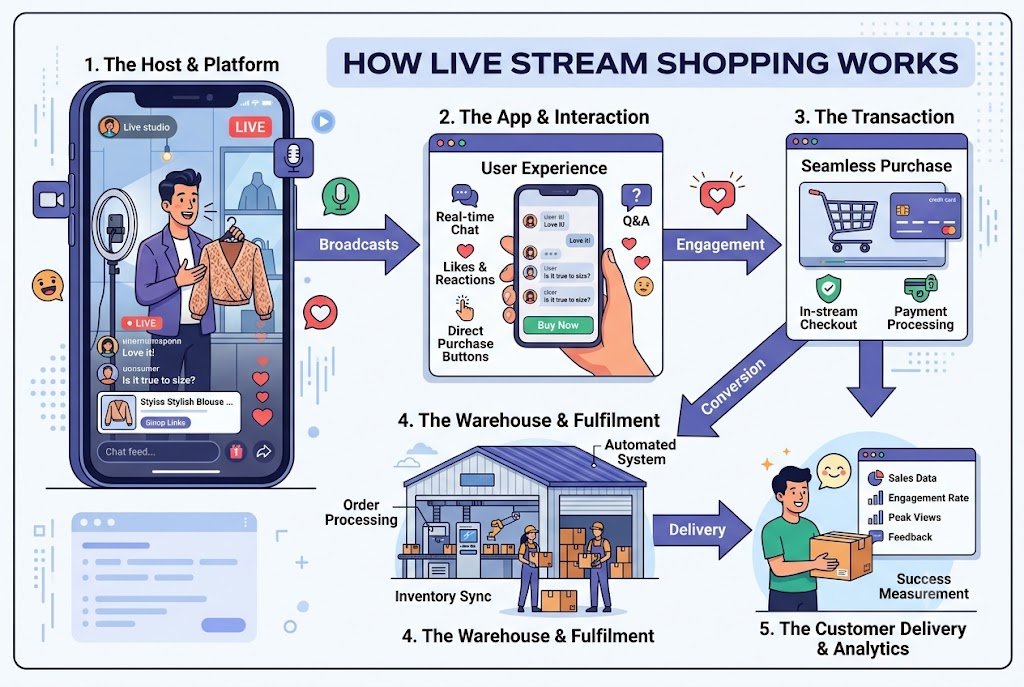
Live stream shopping combines live video, real-time interaction, and online shopping into a single experience. Here’s how the process works from start to finish:
01. Seller Starts a Live Broadcast
The seller launches a live stream on a social media platform, marketplace, or eCommerce website. Before going live, they usually schedule the event and promote it to attract viewers.
02. Products Are Introduced and Demonstrated
During the broadcast, the host presents each product in detail. They explain its features, benefits, pricing, available colors or sizes, and demonstrate how it works. This helps customers understand the product better than they would through photos alone.
03. Viewers Watch and Interact
Customers join the live stream from their phones, tablets, or computers. They can ask questions, request product demonstrations, participate in polls, and receive instant responses from the host, creating a more engaging shopping experience.
04. Product Links and Purchase Options Appear
As products are showcased, clickable shopping links, product cards, or “Buy Now” buttons appear on the screen. Viewers can click these links to view product details, compare options, and add items to their shopping cart without interrupting the live stream.
05. Customers Complete Their Purchase
Once they’ve selected a product, customers proceed to checkout by entering their shipping information and choosing a payment method. Many platforms allow buyers to complete the entire purchase without leaving the live broadcast.
06. Order Confirmation and Payment Processing
After payment is successfully completed, the customer receives an order confirmation via email, SMS, or through the shopping platform. The seller is notified immediately so they can begin preparing the order.
07. Order Packing and Shipping
The seller packs the purchased items securely and hands them over to a shipping carrier. Customers usually receive a tracking number that allows them to monitor their package until it arrives.
08. Delivery and After-Sales Support
The product is delivered to the customer’s address. If needed, customers can contact the seller for returns, exchanges, warranty claims, or additional support. Many businesses also encourage buyers to leave reviews or share feedback, helping future customers make informed purchasing decisions.
Why This Process Is Effective
Live stream shopping creates a more interactive and trustworthy buying experience by allowing customers to see products in action, ask questions instantly, receive exclusive live-only offers, and make purchases within minutes. This combination of entertainment and convenience often leads to higher customer engagement and increased sales.
Industries Using Live Shopping
Live shopping has become a powerful sales channel across many industries by combining real-time product demonstrations with instant customer interaction. Here are some of the most popular sectors using live commerce:
- Fashion – Showcase clothing, footwear, and accessories through live try-ons and styling tips.
- Beauty – Demonstrate makeup, skincare, and haircare products while answering customer questions in real time.
- Electronics – Highlight product features, performance, and comparisons through live demonstrations.
- Home Decor – Display furniture, décor items, and interior design ideas to help customers visualize products in their homes.
- Kitchen Appliances – Show cooking tools and appliances in action, making it easier for buyers to understand their functionality.
- Fitness Equipment – Demonstrate exercise machines, accessories, and workout routines to showcase product benefits.
- Jewelry – Present fine jewelry and accessories with close-up views, styling advice, and limited-time offers.
- Toys – Demonstrate toys through live play sessions, helping parents understand features and age suitability.
- Food & Grocery – Promote fresh products, snacks, beverages, and meal ingredients through tastings, recipes, and cooking demonstrations.
- Luxury Goods – Showcase premium fashion, watches, handbags, and collectibles with personalized presentations and exclusive launches.
- Automotive Accessories – Demonstrate car gadgets, maintenance tools, and accessories with installation tips and practical use cases.
- Pet Supplies – Feature pet food, toys, grooming products, and accessories while explaining their benefits for different pets.
AI in Live Stream Shopping
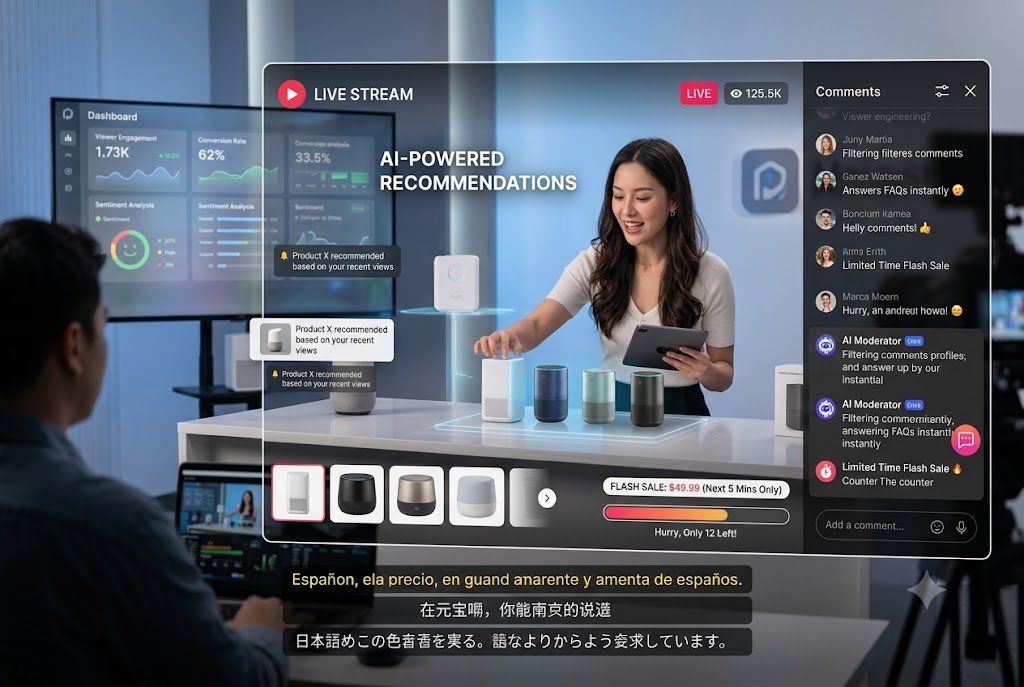
Artificial intelligence (AI) is transforming live stream shopping by making broadcasts more interactive, personalized, and efficient for both businesses and customers. In 2026, AI-powered tools help brands increase engagement, improve customer satisfaction, and boost sales through automation and real-time insights.
AI also enables brands to deliver highly personalized product recommendations, dynamic pricing, and real-time customer experiences during live broadcasts. If you want to learn more about how AI tailors online shopping experiences, check out our guide on eCommerce Personalization Examples, which explains the strategies behind personalized product suggestions, targeted offers, and customer engagement.
AI Product Recommendations
AI analyzes a viewer’s browsing history, purchase behavior, and preferences to recommend products that match their interests. This personalized approach helps customers discover relevant items and increases the likelihood of a purchase.
AI Subtitles
AI automatically generates real-time subtitles during live broadcasts, making streams more accessible to viewers who are deaf or hard of hearing, as well as those watching without sound.
AI Translation
Real-time AI translation converts spoken language and captions into multiple languages, allowing brands to reach international audiences and remove language barriers during live shopping events.
AI Customer Support
AI chatbots provide instant responses to common customer questions about products, pricing, shipping, returns, and availability. This ensures viewers receive quick assistance without waiting for a human representative.
AI Moderation
AI continuously monitors live chat to detect spam, abusive language, fake accounts, and inappropriate content. Automated moderation creates a safer and more positive shopping environment for everyone.
Personalized Offers
AI can deliver customized discounts, coupons, and promotional offers based on each viewer’s interests, shopping habits, and purchase history, encouraging higher conversions and repeat purchases.
Automated Product Tagging
AI identifies the products being shown during the live stream and automatically displays product names, prices, descriptions, and purchase links. This reduces manual work while making it easier for viewers to shop instantly.
AI Analytics
After the live event, AI analyzes key performance metrics such as viewer engagement, watch time, click-through rates, conversion rates, and sales performance. These insights help businesses understand customer behavior and improve future live shopping campaigns.
Common Challenges in Live Stream Shopping
While live stream shopping offers an engaging buying experience, businesses may face several challenges. Understanding these issues and addressing them effectively helps improve customer satisfaction and increase sales.
01. Internet Connectivity
Poor internet connections can cause buffering, low video quality, or interrupted broadcasts, leading to a poor viewer experience. Businesses should use a high-speed, reliable internet connection and have a backup network available.
02. Technical Issues
Problems with cameras, microphones, lighting, or streaming software can disrupt the live event. Testing all equipment beforehand and having technical support on standby can minimize unexpected interruptions.
03. Fake or Misrepresented Products
If products differ from what was shown during the live stream, customers may lose trust. Businesses should provide accurate demonstrations, honest descriptions, and use authentic product images and videos.
04. Low Audience Engagement
A live stream with little interaction may result in fewer sales. Hosts can encourage participation by answering questions, running polls, offering giveaways, and providing exclusive live discounts.
05. Time Zone Challenges
Global audiences may miss live events due to different time zones. Scheduling streams at suitable times, hosting multiple sessions, and offering replay videos can help reach more viewers.
06. Host Presentation Skills
An unprepared or unengaging host may struggle to capture viewers’ attention. Training hosts to communicate clearly, demonstrate products confidently, and interact naturally with the audience improves the shopping experience.
07. Inventory Management
Popular products can sell out quickly during live events, causing customer disappointment. Using real-time inventory tracking and updating stock levels during the stream helps prevent overselling.
08. Return and Refund Handling
Complicated return policies can reduce customer confidence. Businesses should provide clear return, refund, and exchange policies and respond promptly to customer requests.
09. Building Customer Trust
Many first-time buyers hesitate to purchase from live streams. Displaying verified customer reviews, secure payment methods, transparent pricing, and responsive customer support helps build credibility and encourage purchases.
Tips for Hosting Successful Live Shopping Events
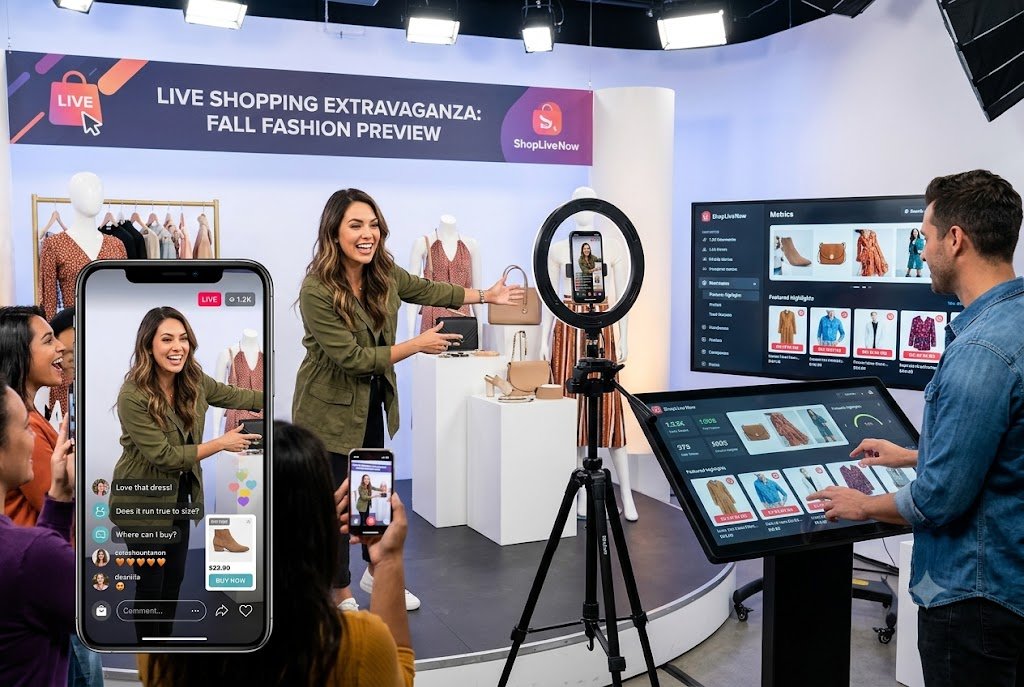
Hosting a successful live shopping event requires planning, engagement, and consistency. Here are the best practices to maximize viewer participation and sales:
01. Promote Your Live Event in Advance
Announce your live stream several days before it begins using social media, email newsletters, and website banners. Early promotion helps attract more viewers and increases attendance.
02. Use Professional Lighting and Clear Audio
Good lighting, a high-quality camera, and clear sound make your products look more appealing and create a professional viewing experience that builds customer trust.
03. Prepare a Script and Product Plan
Outline your presentation before going live. Plan the order of products, key selling points, demonstrations, and special offers to keep the stream organized and engaging.
04. Demonstrate Products Clearly
Show each product from different angles and explain its features, benefits, size, materials, and real-life use. Live demonstrations help customers understand exactly what they’re buying.
05. Respond to Questions Quickly
Monitor the live chat and answer customer questions as they come in. Fast responses build confidence, reduce hesitation, and encourage viewers to make purchasing decisions.
06. Offer Limited-Time Discounts
Create urgency by providing exclusive live-only discounts, coupons, flash sales, or free shipping offers that expire when the stream ends.
07. Collaborate with Influencers or Guest Hosts
Partnering with influencers or industry experts can increase your reach, attract new audiences, and add credibility to your products.
08. Keep the Stream Interactive
Encourage viewers to participate by asking questions, running polls, giving shout-outs, and responding to comments. An interactive stream keeps people watching longer and improves engagement.
09. Review Performance After the Event
Analyze your livestream metrics, including viewer count, watch time, engagement, click-through rate, and sales. Use these insights to improve future broadcasts.
Build a Consistent Live Shopping Series
Many successful sellers treat live shopping as a recurring show rather than a one-time event. Hosting streams on a regular schedule helps build audience loyalty, increases repeat viewers, and creates anticipation for future product launches and exclusive offers.
Best Products to Sell Through Live Shopping
Include:
- Smartphones
- Beauty products
- Gaming accessories
- Clothing
- Shoes
- Watches
- Jewelry
- Kitchen gadgets
- Fitness equipment
- Home appliances
Future of Live Stream Shopping in eCommerce
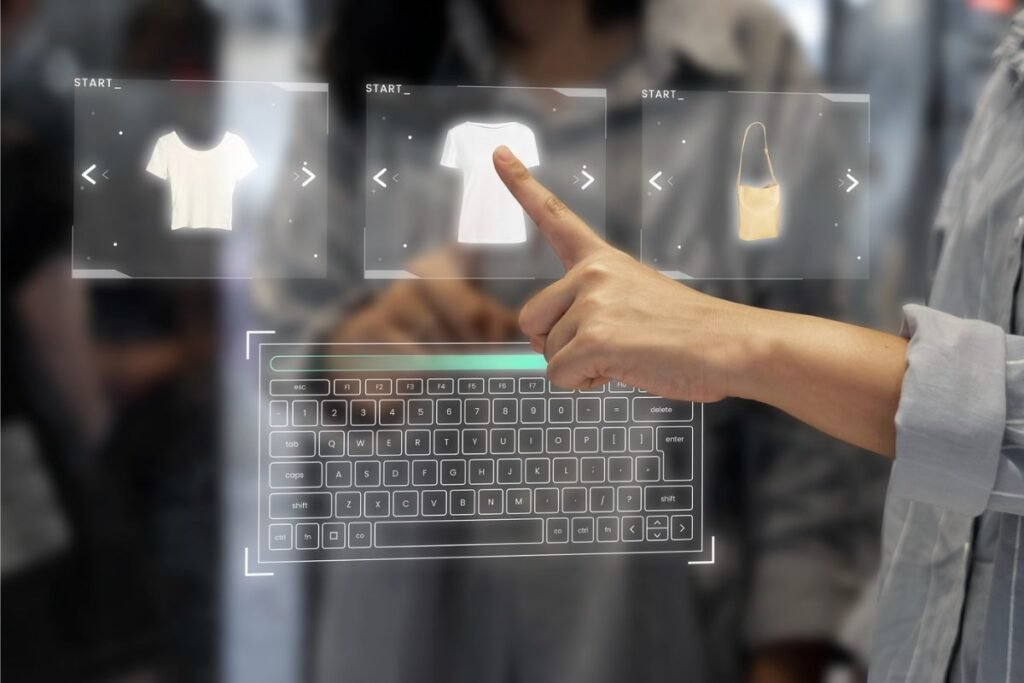
Live stream shopping is evolving rapidly as new technologies reshape the online buying experience. Here are the key trends expected to drive its future:
AI Hosts
AI-powered virtual hosts can present products, answer common customer questions, and provide 24/7 live shopping experiences, helping businesses engage shoppers at any time.
Virtual Influencers
Computer-generated influencers are becoming popular brand ambassadors. They can promote products consistently, reach global audiences, and create unique marketing campaigns.
AR Try-On Experiences
Augmented Reality (AR) allows shoppers to virtually try on clothing, makeup, accessories, or even place furniture in their homes before buying, reducing uncertainty and increasing confidence.
Voice Shopping
Voice assistants will make purchasing even easier by allowing customers to search for products, ask questions, and complete purchases using simple voice commands during live streams.
VR Commerce
Virtual Reality (VR) will create immersive shopping environments where customers can explore virtual stores, interact with products, and shop as if they were visiting a physical retail location.
Personalized Recommendations
Artificial intelligence will analyze customer behavior, interests, and purchase history to recommend products that match each shopper’s preferences, improving the overall shopping experience.
Cross-Border Live Commerce
Live shopping will continue connecting sellers with international customers, making it easier for businesses to reach global markets while offering localized payment, language, and shipping options.
Blockchain Authentication
Blockchain technology will help verify product authenticity, improve supply chain transparency, and reduce counterfeit goods, especially for luxury products and collectibles.
Growth of Social Commerce
Social media platforms will further integrate live shopping features, allowing users to discover, interact with, and purchase products without leaving their favorite social apps.
Looking Ahead
As AI, AR, VR, and social commerce continue to advance, live stream shopping is expected to become more personalized, interactive, and convenient. Businesses that adopt these innovations will be better positioned to attract customers, build trust, and increase online sales.
Comparison Section
Live Stream Shopping vs Traditional Ecommerce:
| Feature | Live Shopping | Traditional Ecommerce |
|---|---|---|
| Real-time interaction | ✅ | ❌ |
| Product demonstration | ✅ | Limited |
| Customer engagement | High | Medium |
| Entertainment | High | Low |
| Conversion rate | Higher | Lower |
| Trust | Higher | Medium |
Conclusion
Live stream shopping is transforming the future of online retail. It combines entertainment, interaction, and instant purchasing into one powerful experience. As a result, both customers and businesses benefit greatly from this modern shopping method.
Moreover, live shopping helps brands build trust, improve engagement, and increase sales more effectively than many traditional marketing strategies. Although challenges still exist, the growth potential remains enormous. So, is live stream shopping the next big thing in eCommerce? Based on current trends, the answer appears to be yes.
FAQs – Live stream shopping
Q1: What is live shopping?
Ans: Live shopping is an online shopping method where brands sell products through live video streaming. Customers can watch product demonstrations, ask questions, and buy items instantly during the live session.
Q2: How does live stream shopping work?
Ans: Live stream shopping works by combining live video with eCommerce features. Hosts showcase products in real time while viewers interact through comments, reactions, and direct purchases.
Q3: Why is live shopping becoming so popular?
Ans: Live shopping is becoming popular because it offers real-time interaction, better product understanding, and a more engaging shopping experience compared to traditional online stores.
Q4: Which platforms are best for live shopping?
Ans: Popular live shopping platforms include TikTok Live, Instagram Live, Facebook Live, YouTube Live, and Amazon Live. These platforms help businesses connect directly with customers.
Q5: What are the benefits of live stream shopping?
Ans: Live stream shopping helps businesses increase engagement, improve customer trust, boost sales, and create stronger relationships with their audience.
Q6: Is live shopping good for small businesses?
Ans: Yes, live shopping can be very effective for small businesses. It allows them to promote products with lower marketing costs while reaching a larger audience online.
Q7: What products sell best during live shopping events?
Ans: Fashion items, beauty products, electronics, home decor, fitness products, and gadgets often perform very well during live shopping sessions.
Q8: Can live shopping increase online sales?
Ans: Yes, many businesses experience higher conversion rates through live shopping because customers can see products in real time before making a purchase.
Q9: What skills are important for successful live shopping?
Ans: Good communication, product knowledge, audience engagement, and confidence are essential skills for running successful live shopping events.
Q10: Is live stream shopping the future of e-commerce?
Ans: Many experts believe live stream shopping is the future of e-commerce because it combines entertainment, interaction, and instant purchasing into one experience.
Helpful Resources
If your readers are interested in technology, digital tools, or online business, they can explore Tech All World and Techh AtoZ for tutorials, software guides, and technology news.
Businesses in the food industry can discover restaurant-related insights on Restaurent.net, while travelers looking for coastal destinations can find useful travel guides on Beach Near.


14 Comments