
 -by
-by Setting the right ecommerce pricing strategy is one of the most important decisions for any online business. Price directly affects your sales, profit margins, customer trust, and long-term growth. If your prices are too high, customers may choose competitors. If they are too low, your profits can disappear quickly.
Successful online stores don’t rely on guesswork. Instead, they use proven ecommerce pricing strategies based on customer behavior, market research, competitor analysis, and business goals. In this guide, you’ll learn the most effective ecommerce pricing methods, when to use each one, and how to optimize pricing to maximize both revenue and customer satisfaction.
What Is Ecommerce Pricing?
Ecommerce pricing is the process of setting product prices for an online store. The goal is to find a price that attracts customers while generating healthy profits.
A successful pricing strategy considers several factors, including:
- Product costs
- Shipping expenses
- Market demand
- Customer expectations
- Competitor pricing
- Brand positioning
- Desired profit margin
Instead of choosing random prices, successful ecommerce businesses regularly review and adjust their pricing based on market changes.
Why Ecommerce Pricing Matters
Pricing affects almost every aspect of an online business.
Some of the biggest benefits of a smart pricing strategy include:
- Higher sales conversions
- Increased profit margins
- Better customer trust
- Stronger brand value
- Improved competitiveness
- Sustainable business growth
Even a small pricing adjustment can significantly increase revenue without increasing website traffic.
Popular Ecommerce Pricing Strategies
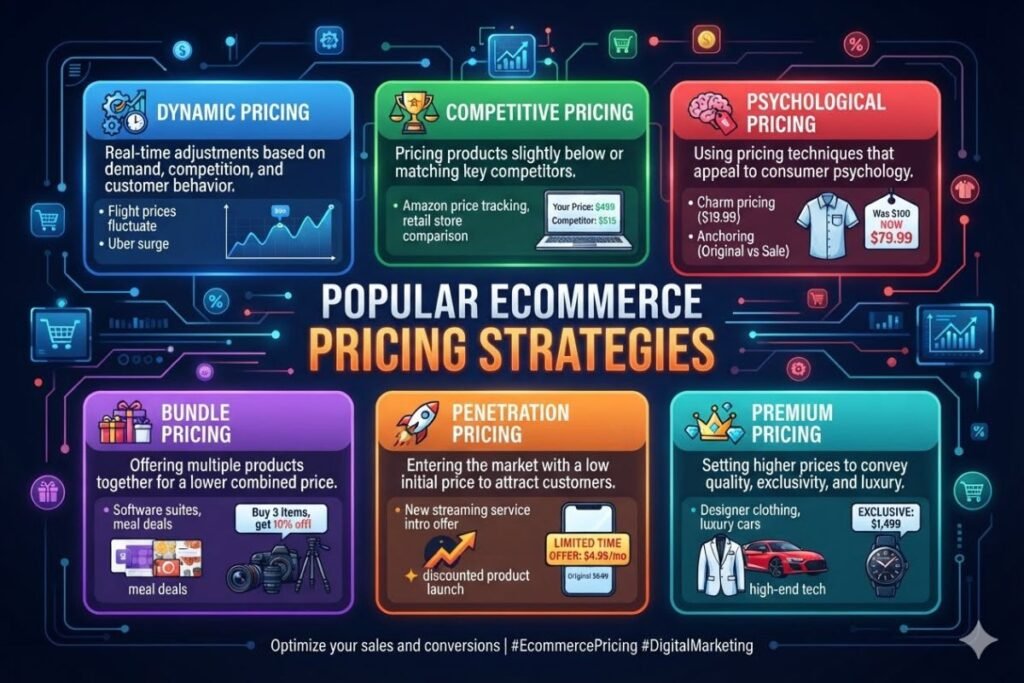
Different businesses require different pricing approaches. Below are the most effective ecommerce pricing strategies used by successful online retailers.
Cost-Plus Pricing
Cost-plus pricing is one of the easiest pricing models. You calculate your total product cost and add a fixed percentage as profit.
Example
- Product Cost: $40
- Desired Profit: 30%
- Selling Price: $52
Advantages
- Easy to calculate
- Guarantees profit margins
- Works well for physical products
Disadvantages
- Ignores customer demand
- Doesn’t consider competitor pricing
Competitive Pricing
Competitive pricing means setting prices based on what similar businesses charge. Many ecommerce stores monitor competitor prices daily and make small adjustments to stay competitive.
This strategy works well for:
- Electronics
- Fashion
- Consumer goods
- Home products
However, competing only on price can reduce profits over time.
Value-Based Pricing
Value-based pricing focuses on how much customers believe a product is worth rather than how much it costs. Luxury brands often use this strategy because customers pay for quality, reputation, and experience.
It works best when you offer:
- Superior quality
- Unique products
- Strong customer support
- Exclusive features
Dynamic Pricing
Dynamic pricing automatically changes prices based on market conditions.
Prices may change depending on:
- Demand
- Inventory
- Season
- Competitor prices
- Customer behavior
Many large ecommerce companies use AI-powered pricing software to update prices several times each day.
Penetration Pricing
New businesses often use penetration pricing by introducing products at lower prices to attract customers quickly. Once customer loyalty grows, prices gradually increase. This strategy works well when entering competitive markets.
Premium Pricing
Premium pricing positions products as high-quality or luxury items. Higher prices can increase perceived value when supported by excellent branding, customer service, and product quality. Examples include premium electronics, luxury fashion, and designer products.
Psychological Pricing
Psychological pricing influences buying decisions through pricing presentation.
Common examples include:
- $9.99 instead of $10
- Buy One Get One Free
- Save 25%
- Limited-time discounts
These techniques encourage customers to make faster purchasing decisions.
How to Choose the Right Ecommerce Pricing Strategy
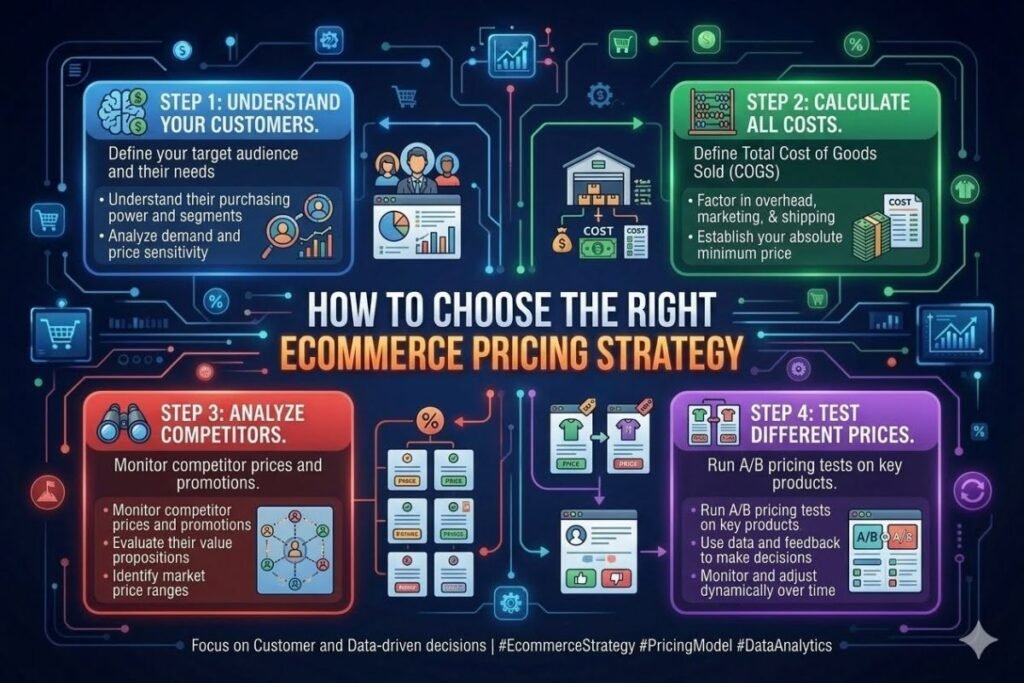
Choosing the best ecommerce pricing strategy depends on your business goals. Consider these important factors before setting prices.
Understand Your Customers
Research your target audience to learn:
- Spending habits
- Income levels
- Shopping preferences
- Buying motivations
Knowing what customers value helps you create pricing that feels fair.
Calculate All Costs
Never price products without knowing every cost involved.
Include:
- Manufacturing
- Packaging
- Shipping
- Marketing
- Payment processing fees
- Taxes
- Returns
This ensures your pricing remains profitable.
Analyze Competitors
Study competitors to understand:
- Average pricing
- Promotions
- Discounts
- Product bundles
- Shipping offers
Avoid copying prices exactly. Instead, identify opportunities to provide better value.
Test Different Prices
Price optimization is an ongoing process.
Run A/B tests by experimenting with:
- Different price points
- Bundle offers
- Limited-time promotions
- Free shipping thresholds
Small adjustments often produce significant improvements in conversion rates.
Common Ecommerce Pricing Mistakes
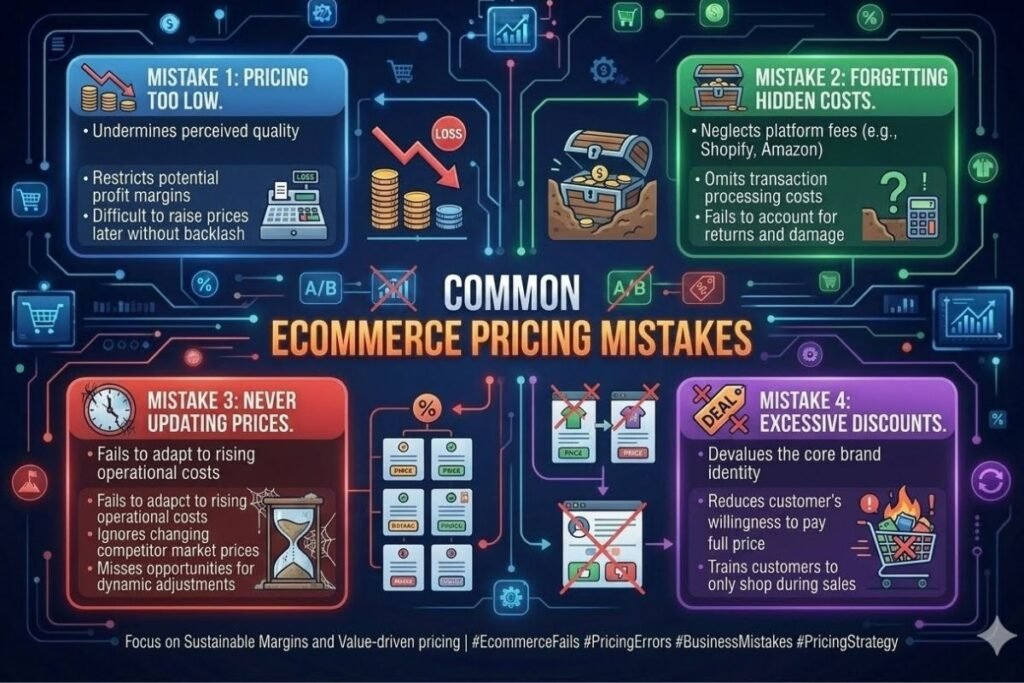
Many businesses lose sales because of avoidable pricing mistakes. Avoid these common problems:
Pricing Too Low
Low prices attract buyers but may reduce profits and make products appear lower in quality.
Ignoring Customer Value
Customers don’t always choose the cheapest option. They often pay more for trusted brands with better service.
Never Updating Prices
Markets constantly change. Regular pricing reviews keep your business competitive.
Excessive Discounts
Frequent discounts train customers to wait for sales instead of buying at regular prices.
Forgetting Hidden Costs
Ignoring shipping, advertising, and transaction fees can reduce profitability.
Ecommerce Pricing Tools
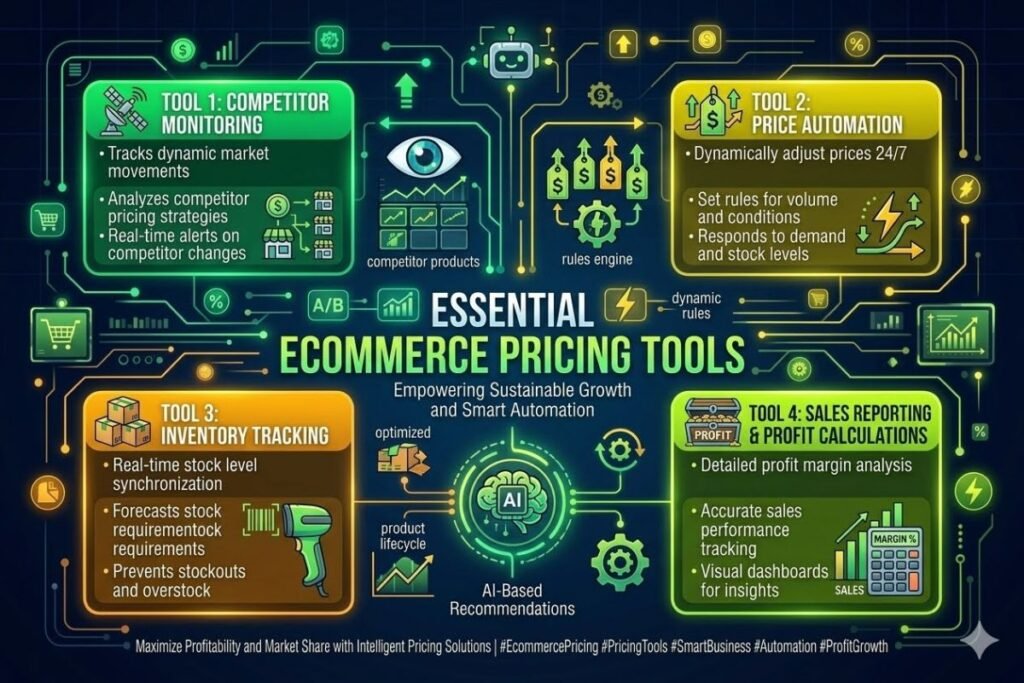
Modern pricing tools simplify pricing management by tracking competitors, monitoring market trends, and optimizing prices automatically.
Helpful pricing software often includes:
- Competitor monitoring
- Price automation
- Profit calculations
- Inventory tracking
- Sales reporting
- AI-based recommendations
These tools help businesses make faster and more accurate pricing decisions.
Best Practices for Ecommerce Pricing
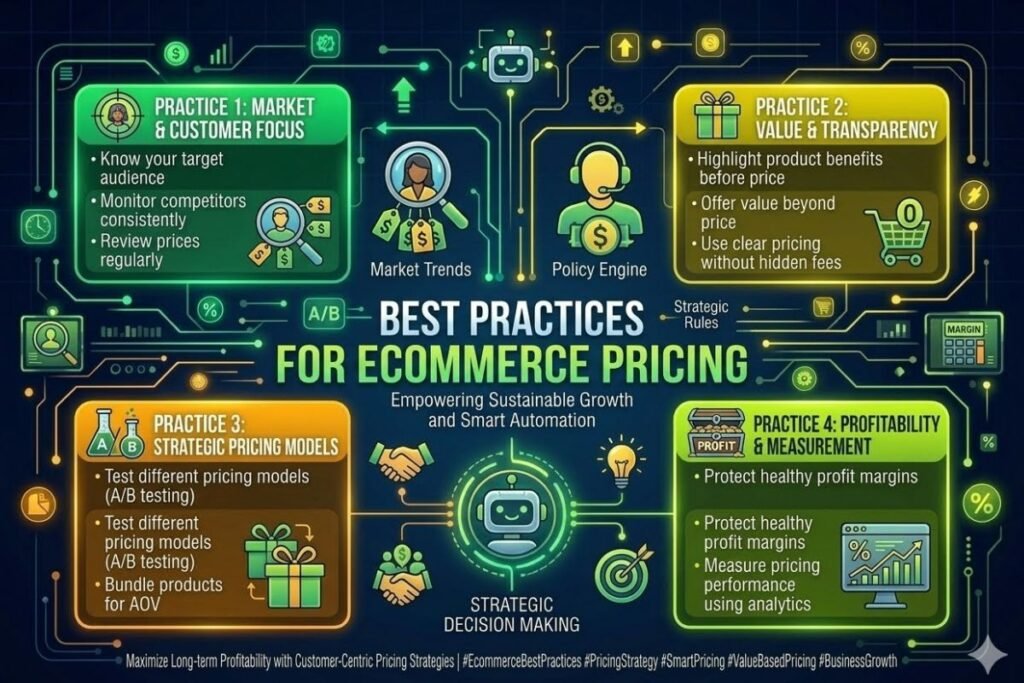
Follow these proven practices for long-term success:
- Know your target audience.
- Review prices regularly.
- Monitor competitors consistently.
- Protect healthy profit margins.
- Test different pricing models.
- Offer value beyond price.
- Use clear pricing without hidden fees.
- Highlight product benefits before discussing price.
- Bundle products to increase average order value.
- Measure pricing performance using analytics.
Ecommerce Pricing Trends
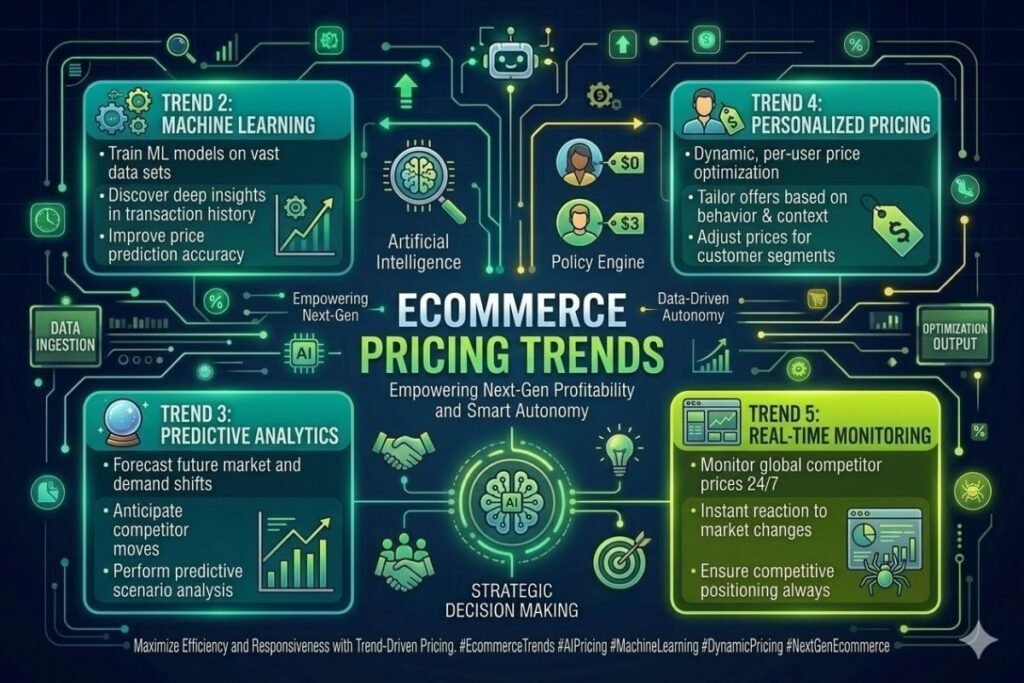
The future of ecommerce pricing is becoming more data-driven.
Businesses increasingly rely on:
- Artificial intelligence
- Machine learning
- Predictive analytics
- Personalized pricing
- Real-time competitor monitoring
- Automated pricing optimization
As ecommerce grows worldwide, companies using smart pricing technology will gain a competitive advantage.
Helpful Resources for Ecommerce Growth
Improving ecommerce pricing works even better when combined with strong SEO, digital marketing, and website optimization.
You may also find these resources useful:
- Tech All World — Technology guides, digital marketing insights, and online business resources.
- Techh AtoZ — Tutorials covering SEO, websites, software, and technology.
- Restaurant — Business and restaurant management articles that can help hospitality ecommerce businesses.
- Beach Near — Travel content and destination guides for businesses in the tourism and travel industry.
For additional learning, explore trusted industry resources such as Google Analytics, Google Search Console, and Shopify documentation to better understand customer behavior and pricing performance.
FAQs
Q. What is ecommerce pricing?
Ans: Ecommerce pricing is the process of setting product prices for online stores based on costs, competition, customer demand, and business goals.
Q. Which ecommerce pricing strategy is best?
Ans: There is no single best strategy. Many businesses combine competitive pricing, value-based pricing, and psychological pricing to maximize sales and profits.
Q. How often should ecommerce prices be updated?
Ans: Review pricing at least monthly. Businesses in highly competitive industries may update prices weekly or even daily.
Q. Does lower pricing always increase sales?
Ans: No. Customers often consider quality, trust, shipping, reviews, and brand reputation before making a purchase.
Q. Can AI improve ecommerce pricing?
Ans: Yes. AI-powered pricing tools analyze competitor prices, customer demand, and market trends to recommend optimal prices automatically.
Conclusion
An effective ecommerce pricing strategy does much more than determine how much customers pay. It influences your brand image, conversion rate, customer loyalty, and overall profitability. Whether you choose cost-plus, competitive, value-based, dynamic, or premium pricing, the key is to understand your customers, monitor the market, and continuously test your approach.
As your business grows, review your pricing regularly and use data to make informed decisions. By combining smart ecommerce pricing with strong marketing, SEO, and excellent customer service, you can build a sustainable online business that attracts customers and delivers long-term success.





3 Comments